Scaling High-Volume Retail: Overcoming Last-Mile Delivery Challenges in Modern E-Commerce Logistics

: The Pressure on Modern Retail Supply Chains
In today’s hyper-competitive retail ecosystem, consumer expectations around delivery speed and reliability have transformed last-mile logistics from an operational back-end function into a core brand differentiator. As order volumes spike across festive peaks and omnichannel flash sales, enterprise retailers face a dual challenge: maintaining strict delivery SLAs while controlling transportation overheads.
According to deep-dive industry analyses published on TCI Express Insights, scaling distribution across India’s complex geography requires moving beyond fragmented regional carriers toward a unified, technology-driven express logistics network.
1. Eliminating Bottlenecks with Full-Cycle Distribution
True fulfillment efficiency starts upstream. Scaling delivery operations requires a seamless transition across three key distribution touchpoints:
Vendor-to-Warehouse (V2W): Rapid line-haul transport ensuring inventory arrives at fulfillment hubs without intake delays.
Inter-Warehouse (W2W) Balancing: Dynamic stock relocation between regional distribution centers based on localized demand forecasting.
Warehouse-to-Vendor/Customer (W2C): Time-definite express dispatch directly into metropolitan and Tier-2/Tier-3 delivery routes.
Leading enterprise express carriers like TCI Express address this by unifying vendor-to-warehouse replenishment with automated express routing, ensuring consignments move through sorting hubs without manual sorting delays. Shippers can also check regional transit readiness and coverage through an instant pincode enquiry across over 60,000 nationwide locations.
2. The Power of Real-Time Consignment Visibility
For high-volume retailers, shipment blind spots lead to customer dissatisfaction, higher support ticket volumes, and increased RTO (Return to Origin) rates. Modern supply chains demand continuous milestone tracking powered by direct API integration and GPS-enabled containerized fleets.
When e-commerce brands integrate real-time delivery tracking directly into their ERPs, both operations managers and end-users gain complete transparency over shipment progress from origin dispatch to final gate delivery. Shippers can immediately track consignment movements using DWB or reference numbers. Seamless digital courier tracking empowers retail dispatchers to proactively manage transit anomalies before they affect the final customer.
3. Solving High-Volume Operational Complexities
To handle surges during peak retail cycles, enterprise logistics networks deploy dedicated value-added solutions:
Sunday & Holiday Deliveries: Eliminating weekend backlogs to keep freight in continuous motion.
Automated Sorting Infrastructure: High-speed sorting centers capable of processing thousands of consignments per hour without human error.
Integrated Cash on Delivery (COD) & DOD Management: Secure and swift remittance cycles for seamless cash flow across large distributor networks.
Cost & Route Predictability: Leveraging instant tools to get estimate for multimodal freight budgeting.
Pan-India Hub Connectivity: Accessing a dedicated network of 950+ owned offices via the branch locator for rapid local pickups and dispatches.
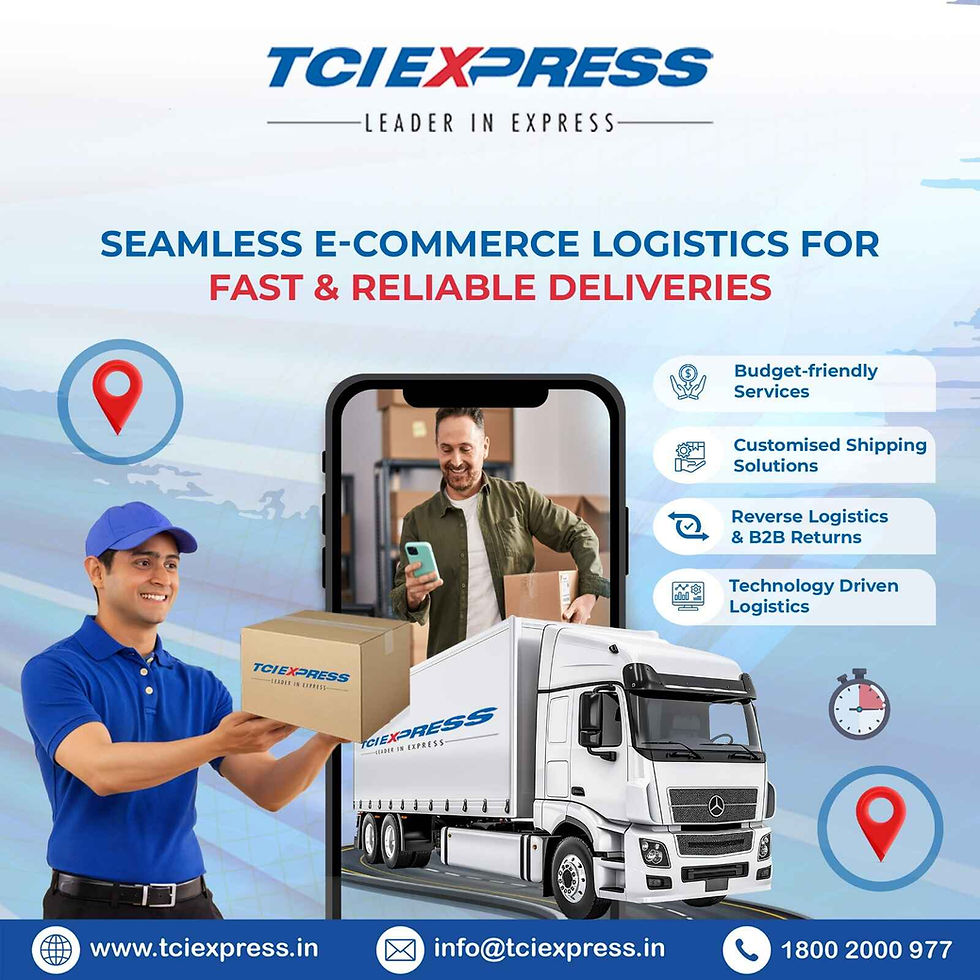
Enterprise Fulfillment: Specialized e-commerce logistics services built for high-throughput retail scaling.
4. Direct Problem-Solution Framework for Supply Chain Leaders
Retail Supply Chain Bottleneck | Strategic Express Logistics Solution |
High RTO & Delivery Failures | Automated address verification + end-to-end track consignment visibility |
Peak Season Capacity Crunches | Multimodal express allocation (Surface, Air & Rail Express) |
Tier-2 & Tier-3 Transit Delays | Hub-and-spoke reach across 950+ owned hubs via branch locator |
Budget & Cost Surprises | Upfront freight calculations with get estimate portal |
5. Frequently Asked Questions (FAQs) for E-Commerce & B2B Logistics
Q1: What makes B2B e-commerce logistics different from standard B2C courier services?
Answer: B2B e-commerce logistics focuses on high-volume shipments, palletized cargo, bulk commercial inventory movement between vendors, warehouses, and retail fulfillment centers with GST compliance, whereas B2C focuses on single-parcel doorstep drops. B2B requires multimodal capacity, time-definite SLAs, and enterprise ERP tracking.
Q2: How can retailers reduce transit delays during seasonal peak sales?
Answer: Retailers can eliminate peak delays by partnering with express carriers that provide 24/7 automated sorting centers, Sunday/holiday dispatches, multimodal transit options (Air/Surface/Rail Express), and real-time consignment milestone tracking.
Q3: How do enterprise tracking APIs improve last-mile delivery efficiency?
Answer: Real-time tracking APIs allow automated data exchange between courier networks and the retailer's warehouse management system (WMS). This provides real-time automated status updates, reduces "Where Is My Order?" (WISMO) queries, and flags delivery exceptions instantly.
Q4: Where can I check serviceability and branch locations for express dispatch?
Answer: Shippers can verify nationwide coverage by using an online pincode enquiry tool or locate nearby operational hubs through the TCI Express branch locator.
Conclusion: Building a Future-Ready Retail Network
Scaling e-commerce logistics is not simply about adding delivery vehicles; it is about building an agile, multimodal distribution ecosystem backed by robust tracking infrastructure and nationwide express connectivity. Businesses that partner with specialized express logistics networks ensure fast delivery times, lower transit risk, and sustained customer trust. For ongoing industry analyses and supply chain whitepapers, explore TCI Express Insights.


Comments